Beyoncé – Texas Hold ‘Em Official Complete VEVO Visualizer | Country Hit 2024
0“Texas Hold ’Em” is one of Beyoncé’s most significant recent releases, not only because it helped define her 2024 country era, but because it immediately changed the conversation around who gets to belong in country music. Released on February 11, 2024, through Parkwood Entertainment and Columbia Records, the song arrived as a surprise drop and quickly became a landmark crossover moment, with the visualizer serving as the public-facing entry point for the track’s bold new identity.
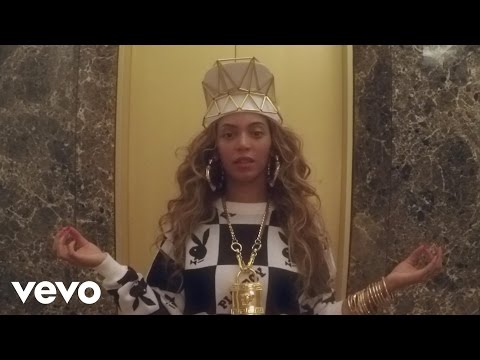
The visualizer reinforces the song’s blend of Western imagery, rhythmic confidence, and Americana styling, giving the release a clear sense of place while keeping the focus on movement, personality, and cultural statement. That matters because the song was not received as just another pop experiment; it became a conversation about genre, race, radio access, and the commercial boundaries of country music.
From a positive perspective, “Texas Hold ’Em” has real value across music, media, fashion, and the broader entertainment economy. It made Beyoncé the first Black woman to reach No. 1 on Billboard’s Hot Country Songs chart, and it also helped her become the first woman to top both the Hot Country Songs and Hot R&B/Hip-Hop Songs charts since those lists began. That is a major industry achievement because it shows that audience demand can outgrow old genre gatekeeping, creating space for more diverse artists, more diverse stories, and more market expansion.
The song’s success also had measurable business impact. In its early tracking window, it drew 19.2 million U.S. streams and 39,000 downloads, while radio and chart momentum pushed it into national conversation almost immediately. Beyond numbers, it energized country radio, country bars, and social platforms, showing how a single release can influence listening habits, nightlife programming, playlist culture, and user-generated content. In that sense, the track contributes not only to Beyoncé’s brand, but also to the work of DJs, venue owners, marketers, content creators, and radio programmers.
There is also a social contribution that should not be overlooked. “Texas Hold ’Em” helped reopen discussion about Black artists in country music and reminded audiences that Black creative labor has always been part of the genre’s history, even when that history is under-credited. For many listeners, the song functions as both a hit record and a symbolic correction, pushing mainstream culture to recognize inclusion not as a trend but as a fact that has too often been ignored.
A critical reading is still necessary. Some listeners felt the song was less a deep country statement and more a highly strategic brand move, designed to generate maximum attention by entering a genre with strong identity politics and commercial loyalty. Others questioned whether the visualizer’s polished Western aesthetic translated into genuine genre belonging or simply repackaged country iconography for a global pop audience. That skepticism is fair, because massive pop stars can sometimes absorb genre symbols faster than they absorb the cultural communities those symbols come from.
There is also a more negative scenario in which “Texas Hold ’Em” is seen as proof of how commercial power can override gatekeeping only when the artist is already famous enough to force the issue. In that reading, the song highlights a structural problem: lesser-known Black country artists may face barriers that a superstar can bypass. That critique does not erase the song’s achievement, but it does show why its success should be viewed as both progress and a reminder of how much work remains.
Overall, the real value of “Texas Hold ’Em” is that it proved a pop icon could intervene in country music without disappearing into its existing rules. It contributed to chart history, expanded public debate, and created tangible ripple effects across streaming, radio, bars, fashion, and digital culture. The track stands as a strong example of how one song can function at once as entertainment, business strategy, and cultural disruption.
Cultural value
“Texas Hold ’Em” matters because it is not only successful, but structurally important to the way 2024 country music was discussed. It challenged assumptions about genre ownership while also proving that listeners are often more open than industry gatekeepers expect. That made the song a major marker of change in modern pop and country crossover history.
Balanced view
The best reading of the song is that it is a smart, joyful, and culturally disruptive statement that widened country music’s public imagination. The harshest reading is that it is a high-powered celebrity intervention that benefits from access and attention many artists never get. Both views are true enough to matter, and together they explain why “Texas Hold ’Em” became one of the defining music stories of 2024.





![Madonna – Bedtime Story (Official Video) [HD] | Surreal 90s Pop Masterpiece, Mark Romanek Visual Art, and Timeless Madonna Legacy](https://generateforgeai.online/wp-content/uploads/2026/07/madonna-bedtime-story-official-video-hd-surreal-90s-pop-masterpiece-mark-romanek-visual-art-and-timeless-madonna-legacy.jpg)